Hello Again

March 5, 2010

I had promised to do this a little while ago.

Grenada is in my thoughts again. Since leaving it as a transfer to Drexel, I have had an amazing time as a 3rd and 4th year student, dabbled in the world of pick-up artists, applied for and failed to match into a Plastic Surgery residency, traveled to Ecuador for a month to learn Spanish, traveled to South Africa for shits and giggles, filed a patent on a medical device to help hospital workers wash their hands more often, worked on a few more books and projects with the folks over at First Aid, become a research physician at a prestigious institution, met my future wife, and I have manage to put a ring on her finger.

In April, I’m headed back to Grenada as a Visiting Professor of Anatomy and I am excited to see what they’ve done with the place.

In my absence, transferring and quitting have been the most popular topics on this blog. I am really happy that people have found a place to discuss both. I am disappointed in myself for not finishing the “transferring” section of this blog and giving it the attention that it deserves. At one time, I thought I might finally write a book about it. But for now, I am building a new site for that topic which will do the issue justice.

Still here.  Still thinking of things to write about.

Cheers, topher.


Missing This

July 11, 2009

I write to you now, briefly, as someone who has dis- and then re- appeared.

I have successfully completed the final two years of medical school.  Most people view the two clinical years as the most interesting years of medical school.  I think I agree with that.

I have gone through the process of applying for a competitive specialty.  I have gone through the match.  I have landed a job.  And I have thinkings about all of it which I’d love to share.

I probably will.

For those of you that still check back to this space, that still wonder “what the hell happened?!”, this is for you.  What do you want to know?

Whatever you suggest, I will address.  Be my impetus.

I can’t wait to start – topher.


Bookends.

June 20, 2009

Why do you write?

***

I don’t have a handle on what’s happened here, though it’s completely under my control. The Rumors Were True began as a manifestation of envy. I’ve told this story before, but I used to write just to make my friends and family laugh. With some practice, I got to the point where I had a reputation for pulling it off. And as it has happened so many times when I find myself becoming successful with something originally challenging, I bore of it and stop. So it was with writing for a laugh.

I needed a new challenge.

Two years ago, I found PURRTY GUD and I was blown away by his writing. I thought, “here’s a guy that is just better than me. Usually with some work, I can match people at things like this but not him and not now. He’s just better.” I knew I was forever less, so it was a perfect place to begin. And fueled by my feeling that I would never measure up and my jealousy for this talent, I began RWT.

In the beginning, it was very stupid. It was very distant. I’m not sure that someone who started reading at that point would have ever gotten a picture of who I was, other than somewhat snarky and in love with my own diction (you can laugh at that). But slowly I started to write things that were a little more naked and personal, and it was from these things that I received the strongest responses. Soon, the goal of every week was to write something good enough to be included in Grand Rounds and I chased that for months.

At this point, I wanted to be famous. I fell into the trap of obsessing over my statistics. How many people read my last story? Where were they from? How long did they stay? Who thinks my story is good enough that they’re telling people to read it? And so on. Finally, I reached a point where 100 people were coming to read every day and I was very proud. I wrote to a friend of mine, “In one year, 1000 people will come to read me every day.” This is what passed for my goals.

Beginning in August of 2006, I was intoxicated with medical school and the Welcome to Grenada project. I was writing about my love of Anatomy, my research, my introduction to clinical medicine on the islands, and about the islands themselves. Writing the WTG guide began to take over the RWT, and I split it into its own blog with its own management, but already the character of my writing was changing again.

I began writing about what I was thinking. I began reacting to things instead of planning every word. I started writing about Flash Raves, MicroCredit, and I struck a chord with my reaction, “A Lazy Attack on Atheism.” What I wrote was becoming less and less about medicine and more and more about me. It was because I was becoming more comfortable with the thought that strangers could know my secrets and that would be “okay”. It was also because I was running out of ideas, grasping at straws. I thought often about ending RWT.

I tried to suck some water from the well by writing Pancakes Every Morning. I hosted Grand Rounds because I was hungry for some new kind of challenge. Immediately after, I gave everything I had left to The Old Man, which I consider to be the best thing that I have ever written and the only thing I ever did outside of my comfort zone. And after that, I felt done.

I twitted away the next month writing pieces I didn’t care about. I started researching the business and law behind the practice of medicine because it was interesting and I was ignorant. But I was empty. I had nothing left worth writing and I had stopped finding joy in it.

RWT should have died long ago save for the USMLE. I found in writing about that experience a steady supply of “new” and a comfort zone of writing guides for others. Telling someone what to do is an easier thing than writing to evoke a feeling. I was jumping over the lower bar.

And then I found a reason to write again.

I became so engulfed in the material while preparing that I began to see deeper into it than I had before, and I was able to spot conflicts and connections as easily as you would spot marinara on a pressed white shirt. It became clear to me. I discovered this while using the First Aid for the USMLE book, and when I went to find a website that listed its errors, I found not a single one.

And I complained about there not being a source. I have written before about my own guiding principle: The Categorical Imperative. In this case (as in all cases), complaining required action: since I wished someone had already made a list of errors, I could not complain about it unless I was willing to make the thing that I felt was missing. This became my reason for writing: to compile a perfect and complete list of errors. To scour the book as few others had ever done and, in doing so, to know more about everything.

Before I knew it, RWT was no longer a place for my writing: it was a one-stop-shop for USMLE adivce, textbook corrections, and so on. This was more interesting to more people than my stories ever were and I quickly reached an average of 1000 visitors a day. The success was discouraging, and insomuch as my statistics were a progress report, I felt that connection had been completely lost.

And as it has happened so many times when I find myself becoming successful with something originally challenging, I bore of it and stop. So it was with writing about medicine.

Perhaps I set the bar too low or that I chose the wrong metric for success. Whatever the case, it couldn’t have happened at a worse time as I left for Asia and from writing for the next six weeks. Long distance for any weak relationship delivers the final blow. I felt done with writing. In the weeks after returning, my only reason for coming back here was to update and maintain the USMLE portion of this site. Whatever drove me before was gone.

And now as I begin the second half of my medical school career, I find I need something from this space, from whomever has stuck around this long to see if I have anything left to say, that I cannot get. RWT feels ruined by its success. From the First Aid Errors project, I earned the attention and interest of the First Aid Team. Shortly, I will begin working for them. This is fantastic news that I have not been able to share with you until now.

At the same time, I am applying for transfer to US medical schools, and the successes of the Welcome to Grenada Guide and the FA Errors have become selling points on my application. This has made RWT public (as it always was) and has stripped me of any illusions of anonymity. I have never been as diligent about keeping myself anonymous as I could or should have been, but its loss has never been so obvious to me as it is now. At a time where I need this space to be a place for me to be my most honest, where I need the catharisis of venting and a chance to share my frustrations with feeling uncertain about my future and my fears that medicine has facets of it that I feel strongly against, RWT has begun to feel as much a liability as an asset.

I feel watched. I feel known in an uncomfortable way. I feel twisted into self-censure.

I cannot write the way that I need to on RWT anymore. It no longer feels like my journal and a safe for my memories. Now, it feels like a bulletin board of updates and other stale things. I could continue to write here about happy things, about funny things, about critiquing things but I cannot write about sad things, frustrating things, about hating things. I am not Ying or Yang, but the pair, and I worry that this simple thing that is true about all of us could hurt me to show it. I worry about a dishonest portrayal of what life is like.

And now I think it is time for RWT to end. Not deleted (because people still find use in it), or forgotten (it remains the safe for everything that happened to me early on in this new life) or regretted (I learned so much about myself while writing it).

It will end because I was sloppy and couldn’t keep it from mixing with the reasons not to write.

***

Why do you write?

I write to think.
I write to remember.
I write to help others.
I write to stretch and twist and understand new ways of seeing the world.
I write to help people understand me, if for no other reason than to feel understood. To connect.
I write to make you a part of my life so that mine feels larger.
I write for vanity.
I write for the freedom of anonymity.
I write because I need to feel whole and this gets me there.

***

I look back to PURRTY GUD now and I better understand him. He was anonymous to the world as he wrote but his family and friends were all reading. He wrote about it ruining things, about feeling like it was bringing more harm to him than good. When he graduated, he decided to end the blog and start a new one for his residency. It was then that he revealed his name. It wasn’t a few weeks before it completely disappeared. He gave out his email address for those that wanted to know if he was ever writing again and if they could follow him to this new anonymous place.

He hasn’t. I think I get it now.


Keeping busy.

August 24, 2008

I am still writing.  I have a bank of stories that I’m going to release after the Match about everything that has happened over the last two years.  With all my free time since ignoring the internets, I’ve been able to do other fun things.  This is one of them.  Also, this is my face and my voice.

As far as the cube goes, I bought one in November of 2007 and went to Lars Petraus’ website. 

  1. Step 1 – Build a 2x2x2 corner
  2. Step 2 – Expand to 2x2x3
  3. Step 3 – Twist the edges (I use one algorithm from this)
  4. Step 4 – Finish 2 layers (I use one algorithm from this)
  5. Step 5 – Position the corners (I use one algorithm from this)
  6. Step 6 – Twist the corners (I use three algorithms from this)
  7. Step 7 – Position the edges (I use one algorithm from this)

It took my about two days to figure out my first solve (basically following the website move for move).  It was another week before I could solve it without looking at my cheat sheet of written algorithms.  Another week before I was sub-5 minutes.  A week later it was 3 minutes.  I spent about a month hovering around 90 seconds and have been stuck at 45-60 seconds for the past three months without any real improvement.

I have no plans to solve it blindfolded, but appreciate all the people that tell me they won’t be impressed until that happens.  You people suck.

Don’t let the books swallow you, topher.


Grapes and Wine

June 12, 2008

You start with seeds and their finite potential. You are going to make something great with this field and these seeds. You plant them, water them, love and dote on them. They are nurtured and they sweeten in the sun. And then, when they cannot grow this way any more, you pluck the best.

You take these grapes, throw them into a barrel, and ignore them. You don’t give them sun, activity, or anything familiar. It’s quite a shock to the grapes. You do this for years. And years.

Out pops wine.

Pretty inefficient, but I don’t know how I would fix it. I don’t know that trying to speed it up won’t make for something unpalatable. I guess I just have to deal with the ignoring and waiting until those grapes magically turn themselves into something more.

Pretty much what the third year of medical school has felt like. I haven’t written about it.

Before, my shtick was looking around and sort of cataloging all the interesting things that were happening around me. Not a lot of introspection going on. Nothing to write about inside the barrel that is my hospital. Or there is, but that’s not the story.

The story is the fermenting. My classmates and I are taking on new flavors and textures. A few might be prematurely alcoholic. Others have lost their sweetness. Most rougher for the wear and rarely anyone smoother.

And it is incredible.

I put up a hell of a fight. A nine month spectacle of twisting, thrashing and spitting. On March 5th, 2008, I broke. Emotionally. Mentally. Broke. It was awful. I haven’t written about it because I’m unsure on these new, wobbly legs.

But for the first time I know what language is supposed to do. I know how people reward their physicians. I understand patience. I have experienced the risks and rewards of vulnerability. What is and is not important has been impossibly rearranged in my head. When I look at the decisions I am making now, I don’t recognize them as coming from my past. All of it seems to come from very different stuff.

But then you never could have told me, after I rolled one around in my mouth, that grapes could give way to wine.


Pancakes Every Day Video

December 26, 2007

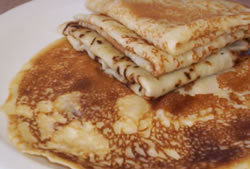
A little over a year ago, I was behind in my work and trying to catch up. Procrastinating, I wrote a short blurb about how going to medical school is like having to eat a stack of pancakes every morning. Some people thought it was funny. About 10 months later, a good friend of mine at Saint Louis University Medical School called me up to ask if he could use the concept for a 72-hour film competition. Of course, I said yes.
So he and his friends expanded it, added new portions, and really transformed it into something better than it was before. They pulled off the 7-minute feat in 72 hours, submitted it, and then on the night of the festival came home with FIRST PLACE!

Finally, it’s up on YouTube.   Merry Christmas, everyone!

Med School Metaphor: Pancakes Every Morning (orginal story)

Pancakes Every Day (prize-winning short film)


Transferring from the Caribbean: Preparing for the Interview

July 7, 2007

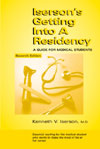
iserson.jpgThere are a lot of things you should do for your interview, and Iserson’s Getting into a Residency covers all of them. I bought this book a month before I anticipated any interviews and read it cover to cover in the first two days. I was left dumbstruck by this book. When speaking about special situations like being an FMG, his advice is that the most important thing you can do is transfer to a US medical school. That knocked me in the head. There is a chapter called “The Questions – The Answers” that lists over 300 questions that people have been asked in residency interviews, what these questions are trying to discover about the interviewee, and strategies for handling them. I sat down and typed out every single question, printed them out, and then spent the next week forming my best answers. He will teach you how to stand, how to sit, and how to pack your suitcase so that things do not wrinkle. What to wear, what never to say, and what to do before during and after the interview are all topics that are covered very well in this book. If you walk into this interview without a resource like this, you are making a mistake.Why am I recommending a book about getting into a Residency? As a transfer student, you are already in medical school and are expected to know a little more about the field, its problems, and your place in it. There is an assumption made that if you have the grades and the recommendations to transfer, then you must be a very serious and driven medical student. Serious, driven medical students know what they want and have researched how to get it. In this way, you are much like a residency applicant who knows what type of physician he wants to be, where he wants to live, and which program will help you achieve this.

After reading this book, doing the research that it outlines for each institution to which I was applying, and answering all of the questions, I was in a place where I could enter the interview confident that I had not forgotten anything and that I had prepared as well as I Possibly could have. The confidence that comes when you can stop worrying about these things is invaluable, and I highly recommend the book for this purpose.

carnegie1.jpgThe second book I recommend it Dale Carnegie’s How to Win Friends and Influence People. This book changed my life. The way I read people’s response to what I say, the way I understand what they are saying, and how I handle every situation has been informed and altered by this book. I can say with confidence that a great deal of the good that has happened to me in the last year has happened because of the way I handled situations after reading this book. During my interview day, I saw so many of the other students making mistakes (some of them crippling) that are outlined by Carnegie. There was also one applicant that I noticed because she was so expertly handling the same questions and situations that were killing the other applicants. After the day was over, I told her that out of the entire field, she had her best foot forward the entire time and that if anyone was going to get in based on their interview today, it would be her. She emailed me a week later with the good news that she had been offered a spot. Do yourself the favor of reading this book. There are almost 500 reviews at Amazon.com (avg 5 stars). Here is a review of the book and how it changed someone else’s life.


Transferring from the Caribbean: Getting the Timing Right

June 29, 2007

Depending on your academic calendar, the timing of your application and your options may change. As an SGU student, I will speak about our problems specifically.

Students that begin in August have a good chance to apply for a second year spot at the end of their first year. Most schools begin accepting applications in February march, interview in June, and accept at the end of June/July for an August start date. Having completed only a year of medical school, you likely have had little time to explore research and develop strong relationships with the faculty that may write your recommendations. The school does not have much to use when considering you. They have your first year grades (mostly useful in comparing you to your classmates) and your MCAT scores. Know that you will be competing against people with a 4.0 and a 30+ MCAT. If you can get a hold of someone that has successfully transferred into the second year, ask them who wrote their recommendations. There is a good chance that this person has a reputation for endorsing strong students.

If you are planning on applying for a third year spot at the end of your second year, you will find this to be much harder. Most schools will want to see your USMLE Step 1 score when considering your application. Any January students from the term ahead of you will have already taken their Step 1 and have scores in hand. It will be very hard to compete against someone that already has a 99 even if you end up with a similar score. You can still apply for a third year spot at the end of your third year (which means repeating a year of clinical work). If you decide to do this, know that it will not be enough that you are “so far ahead” of the other applicants in terms of experience, the school will want to see that you have Honors in your clerkships.

Students that begin in January have more options. As a January student, I had the option of applying for a second year spot halfway through my second year. In this way, you have the opportunity to demonstrate A-level work on the second year material that you would have to repeat, you have a little more time to develop relationships with the faculty in hopes of having a strong letter of recommendation written, and you have enough time to become involved in research or other projects that might set your application apart.

You are also well positioned to apply for a third year spot at the end of your second year. Finishing in December, you will have five months off until you begin your clinical rotations. You can use this time to prepare as much as you need to for the USMLE Step 1, you have time to receive your scores and submit them by April (two months before the application deadlines), and you have plenty of time to make sure that your essays, recommendations, and transcripts are heading in the right directions. You also have an opportunity to pursue research or some other project to strengthen your application. The drawback is that you will have to begin your clinical rotations before the interviews begin. This means moving to a new area, finding a place to live, and taking time off to interview. I went through this and recommend starting your rotations instead of deferring them (if you defer, you may have some difficult questions to answer in the interview), subletting an apartment for two months instead of committing to a lease that you may have to break (and leaving any roommates in a difficult situation), and giving ample notice to your site director that you may need to take some time off for interviewing.


Transferring from the Caribbean: Which Schools Accept FMGs?

June 29, 2007

It changes. Coming from the Caribbean, you are part of an institution that is outside of the Liaison Committee on Medical Education (LCME). Almost all the medical schools in the US and Canada are LCME-accredited and this is the requirement to move between them as a transfer. Few schools elect to consider non-LCME students. To find out which schools accept non-LCME students, I went to the AAMC’s website for transfer policies by school. I asked to search by policy then narrowed my search by selecting ALL schools in ALL regions and selecting all the boxes accept for the first four (LCME-accredited applicant, Osteopathic applicant, Dental applicant, Oral and Facial surgeon applicant). This generated a list of 54 institutions accepting transfers into the second year and 73 accepting applicants into the third year. There is some overlap.

I then sat down and called every single institution to ask about their transfer policy for non-LCME students. This is important to do if you are serious about transferring and this level of effort will separate you from your peers. You will find out before applying if a school that has always accepted transfers has recently changed its policy, has no availability this year due to an oversubscribed first year class, or has recently begun to accept transfers. There have been cases where the school said “no” over the phone, the student applied anyway and was then offered an interview. The determined student will always have an advantage over the complacent student. Decide which one you are going to be and then plan accordingly. The programs that I contacted told me that the information on this site concerning number of available spots is inaccurate, so do not let a “0 spaces available” stop you from inquiring. Plus, it builds character.

There are several schools that often have spaces available nd are well known to those that frequent the discussion boards. These school are:

1. Drexel University

2. George Washington

3. New York Medical College

4. Northeastern Ohio University College of Medicine (NEOUCOM)

5. SUNY Upstate

6. Tulane University

7. University of Medicine and Dentistry, New Jersey (UMDNJ)

In addition to this list, I was able to confirm that eight other schools would accept non-LCME applicants. I do not feel like I have given too much away with this list as it is available everywhere, but if you are willing to search for the remaining schools than you deserve to be separated from others for your effort. Do not forget to call the medical schools in the state where you have residence. Several state schools do not accept non-LCME applicants but do accept applicants that are residents of the state regardless of school affiliation.

As the information begins to pile, it is a good idea to remain organized. Open a spreadsheet with a space for the school, its application deadline, fee, email contact, phone number, application cost, number of required recommendations from undergraduate and medical faculty, required transcripts, etc. Happy hunting.


Transferring from the Caribbean: Why?

June 29, 2007

I wrote a guide about attending a Caribbean medical school, singing the praises of St. George University. I kept a blog for two years at the Rumors Were True shedding light on some of the uniqueness of the island experience. SGU was a place that invited me to test my mettle and gave me the space to realize my potential in medicine. I love the school, the Caribbean, and still count it as the first great decision that I made in a new life of great decisions.

Then I transferred to Drexel University College of Medicine. Why?

When I applied to SGU, I knew that I wanted to be a physician in the United States, that medicine was the only thing that I felt could fulfill me as a profession, and that no matter what obstacles I faced I was going to make this happen. I was not sure what I wanted to do in medicine and it was important to me that as many doors remain open as possible. Going to the Caribbean (you will be told) can close many doors, and you will hear people tell you that you cannot do such-and-such if you come from the Caribbean.

SGU has an earned reputation for producing strong students and their residency placement list each year boasts this, showing students in fields such as Anesthesiology, Diagnostic Rad, ER, Ophthalmology, Orthopaedics, and Urology. The list of residency placements between 1997 and 2002 impressed me particularly when I decided on SGU. That said, my understanding of the residency application process has matured to reveal things previously missed.

The first is that Foreign Medical Graduates (FMGs) are able to accept residency placements outside of the match. This can be to the advantage of FMG applicants that might be able to secure a spot now that they would not get if they waited for the match (plenty of stories of this happening). The list available through SGU does not draw a distinction between how their students’ placements were secured, so looking at the list alone does not tell you how you can expect to fare when it is your turn to open the letter on Match Day. The second thing I have come to appreciate is that while there is a bell curve for desirable fields, there are bell curves within those fields for desirable residency programs. For example, while Orthopaedic surgery is a desirable field and incredibly competitive on the whole, there are Orthopaedic residency programs that are incredibly desirable and those that are less so. If your goal is to become an Orthopaedic surgeon coming from the Caribbean, this is certainly possible. If you want to do Orthopaedics at the Mayo Clinic, this truly approaches the impossible. It is also important to keep perspective on how many students are able to place into these fields. If only three students from your school made it into the specialty that you want and your class size is somewhere near 600, you need to honestly asses where you stand in your class and if it is likely that you will be one of the three in the coming years.

The process of “auditioning” for certain programs is also at issue. SGU has many hospitals for its students in the New York and New Jersey area and you are more or less free to complete your rotations and electives at any of them. When it comes time to apply for residencies, it is sometimes a good idea to complete an “away” elective at the desired hospital. In this way, the program gets to see your stuff and give you a much better look when it comes time to invite people into their program. This process of completing “away” rotations is open for US medical students but is much more difficult for FMGs, and this is because of reciprocity. Reciprocity is the agreement that schools like Mayo will accept and train a Harvard student during an elective “away” rotation with the understanding that Mayo students can be accepted and trained at Harvard should they so choose (an example from NYMC). These agreements are often non-existent between Caribbean schools and their US counterparts. If you plan on staying in the New York/New Jersey area and completing your residency training at one of the hospitals already associated with SGU, then this is not an issue. For those looking to enter competitive programs spread across the US, this is an issue that puts you at a disadvantage.

Finally, insomuch as residency program directors and medical school administrators represent an Old Boy’s Club (I have no idea if this is true or its possible extent) where a well-placed phone call can mean your application at the top or bottom of the stack, I wanted that resource available to me. I wanted to make sure that the clinicians that were teaching me were also faculty with my university and that their professional connections could be opened up to me should I impress them. Moving from the islands to the US left me with the feeling that my mentor, advisers and teachers were largely unavailable to me and that any influence they could have offered stopped in the tropics.

It is good to be aware of these concerns, but they are not unique to anyone. As an FMG, when it comes time for you to answer the “why transfer?” question at your interview, you are not setting yourself apart by regurgitating this. This may be fine since the interviewer is looking for someone that knows why he is doing something as opposed to being just another guy that heard he should apply for transfer since he has good grades, but it does not help the interviewer remember your answer.


Follow

Get every new post delivered to your Inbox.

Join 42 other followers